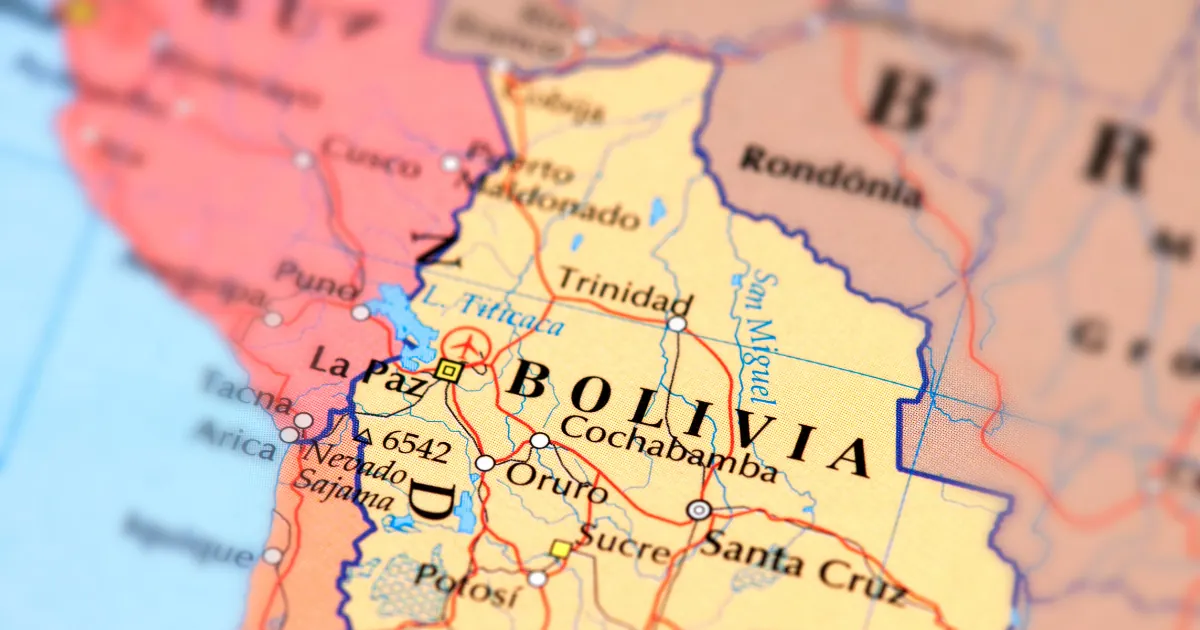
Company Formation in Bolivia
Register a company in Bolivia through the S.R.L. structure, with notarized incorporation, tax registration, and foreign-investment compliance handled correctly from the start.
How to Set Up a Company in Bolivia
Most foreign-owned companies in Bolivia incorporate as a Sociedad de Responsabilidad Limitada (S.R.L.), which allows 2 to 25 partners, full foreign ownership, and simpler governance than a Sociedad Anónima, which requires a board and a mandatory external auditor. Incorporation is executed as a notarial deed (Escritura Pública) and registered with SEPREC, Bolivia's national commerce registry. There is no meaningful statutory minimum capital. Once registered, the company obtains its NIT (tax ID) from the Servicio de Impuestos Nacionales (SIN) through its biometric registration system, which includes a physical inspection of the company's fiscal address. Capital brought in from abroad must be registered with the Banco Central de Bolivia. Formation typically takes 5 to 6 weeks, with tax registration and corporate bank account opening adding another few weeks; the realistic end-to-end range is 8 to 14 weeks.
Key Requirements
Entity type: Sociedad de Responsabilidad Limitada (S.R.L.), Bolivia's standard vehicle for foreign investors, allowing 2 to 25 partners and full foreign ownership without a mandatory external auditor
Minimum capital: no meaningful statutory minimum set by law
Registering agency and tax authority: SEPREC records the incorporation as Bolivia's national commerce registry, and the SIN issues the NIT through its biometric registration process
Notarization: required. Incorporation is executed as a notarial deed (Escritura Pública) before registering with SEPREC
Foreign-shareholder specifics: a locally domiciled legal representative is required, and capital contributed from abroad must be registered with the Banco Central de Bolivia to document the original investment
Document requirements: foreign corporate documents and powers of attorney typically need an apostille and certified Spanish translation before they can be used in the incorporation process
Common Challenges
NIT registration includes a physical inspection of the fiscal address
The SIN conducts an in-person inspection of the company's registered address as part of NIT issuance, requiring visible signage and someone present to receive the inspector. Foreign investors expecting a fully remote tax registration are often caught off guard by this step.
The municipal operating license is a separate technical inspection
A Licencia de Funcionamiento from the local municipal government requires its own technical and safety inspection of the physical premises, run on a separate track from SEPREC and SIN registration.
Hiring even one employee triggers a separate labor registration
The moment the company has an employee, it must register with the Ministry of Labor's Registro Obligatorio de Empleadores (ROE), a distinct filing from SEPREC and SIN that foreign owners without local support often miss until it's overdue.
How NavviPal Helps
End-to-end S.R.L. formation, from the notarial deed through SEPREC registration and NIT issuance with the SIN
Coordination of the fiscal-address inspection and municipal operating license so registration isn't delayed waiting on either step
Foreign investment registration with the Banco Central de Bolivia handled alongside formation, so capital is properly documented
Ongoing guidance on labor registration (ROE) and other post-formation compliance triggers foreign owners commonly miss
Frequently Asked Questions
Why does Bolivia's NIT registration require a physical inspection?
The SIN (Servicio de Impuestos Nacionales) conducts an in-person inspection of the company's registered fiscal address as part of NIT issuance through its biometric registration system, requiring visible signage and someone present to receive the inspector. Foreign investors expecting a fully remote tax registration are often caught off guard by this step, since it cannot be completed online.
Is there a minimum capital requirement to form an S.R.L. in Bolivia?
No. Bolivia sets no meaningful statutory minimum capital for an S.R.L. by law. The entity allows between 2 and 25 partners with full foreign ownership and does not require a mandatory external auditor, unlike a Sociedad Anónima.
Is notarization required to form a company in Bolivia?
Yes. Incorporation in Bolivia is executed as a notarial deed, the Escritura Pública, before the company is registered with SEPREC, Bolivia's national commerce registry. This is a separate step from the NIT tax registration and municipal operating license that follow.
Is a municipal operating license required in addition to SEPREC and SIN registration in Bolivia?
Yes. A Licencia de Funcionamiento from the local municipal government requires its own technical and safety inspection of the physical premises, run on a separate track from SEPREC company registration and SIN tax registration. It cannot be started until the company already has a registered address in place.
Does foreign capital brought into Bolivia need to be registered anywhere?
Yes. Capital contributed from abroad must be registered with the Banco Central de Bolivia to document the original investment. This registration is separate from SEPREC and SIN registration and matters most when profits or capital are eventually repatriated.
More on Bolivia
Explore related services and topics for Bolivia.
Ready to manage Company Formation in Bolivia?
NavviPal handles every step so you can focus on building your business, not navigating bureaucracy.